You spent good money on your dentures. You wear them every day, eat with them, smile with them, and rely on them more than you probably realize. So when bacteria, stains, and bad odor start building up, the problem usually is not that you skipped cleaning. Most denture wearers clean them daily. The real issue is that many people are using the wrong products entirely.
Some cleansers are too harsh and slowly break down the denture material. Others are too weak to remove the biofilm that forms overnight. And a surprising number of people are still using regular toothpaste, which is one of the worst things you can put on dentures. The wrong cleanser does not just affect freshness. It affects fit, color, durability, and your overall oral health. The good news? Once you know what actually works, keeping your dentures clean becomes simple, fast, and far more effective.
The Science Behind Denture Buildup and Why It Matters
Dentures sit in a warm, moist environment all day long, which makes them a perfect surface for bacterial growth. According to WebMD’s dental care guide for seniors, ill-fitting dentures and poor oral hygiene can trigger a buildup of Candida albicans, which directly causes denture-induced stomatitis, a painful inflammation of the tissue sitting underneath your denture. This is not just a cosmetic concern. Untreated bacterial buildup on dentures can spread to the gum tissue, cause persistent soreness, and even contribute to systemic health issues in older adults. A proper cleaning routine using the right cleanser is not optional. It is a basic part of maintaining your oral and overall health.
Everyday Cleansers That Actually Get the Job Done
Effervescent Tablet Soaks
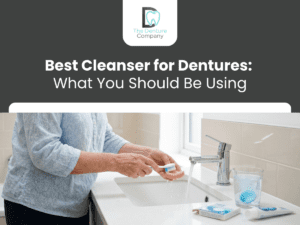
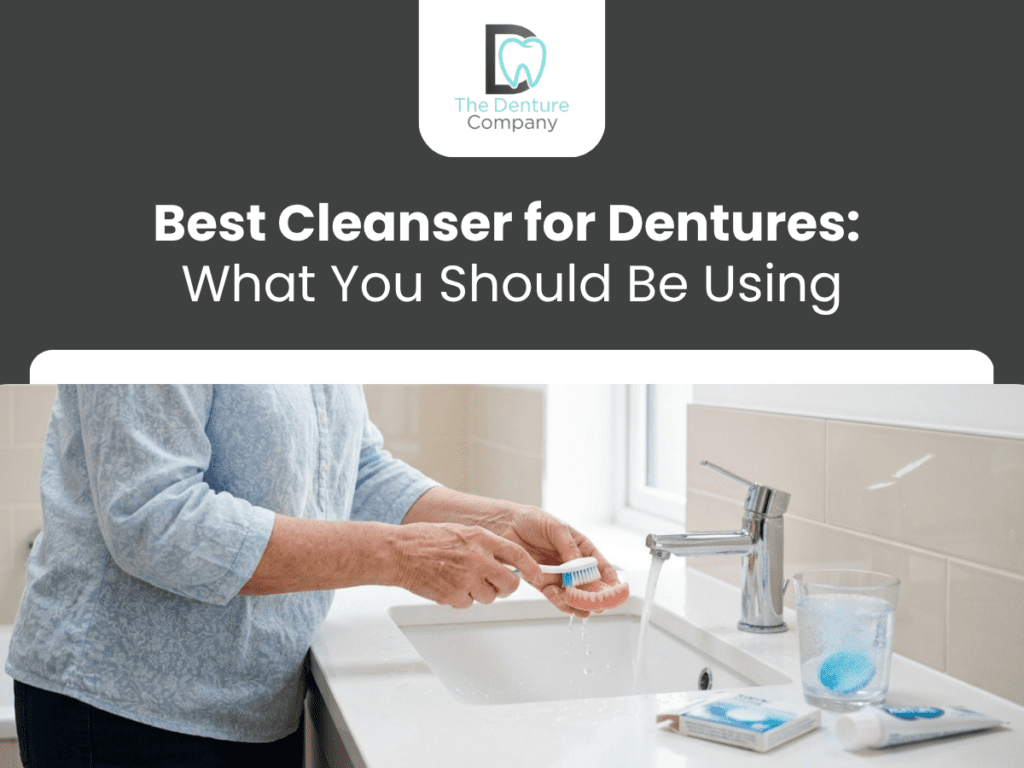
Effervescent tablet cleansers like Polident and Efferdent are among the most widely used and well-supported options available. You drop a tablet into water, place your dentures in the solution, and let the fizzing action do the work. These products are designed to kill bacteria, remove light stains, and eliminate odor without scratching the denture surface. They work well as a nightly soak and are affordable enough for daily use.
Ultrasonic Cleaners
If you want a deeper clean without any scrubbing at all, an ultrasonic cleaner is worth considering. These small devices use high-frequency sound waves to vibrate water around your dentures, dislodging debris from every surface, including areas a brush cannot reach. They are particularly helpful for people with partial dentures that have metal clasps. Used alongside a soaking solution, they offer one of the most complete cleaning options available.
Denture-Specific Pastes and Gels
Not all pastes are the same. Denture-specific pastes are formulated without the abrasive ingredients found in regular toothpaste. They are safe for the acrylic material most dentures are made from, and work well for light surface cleaning during your morning or evening brush. Look for products labeled specifically for dentures and always use a soft-bristle brush to go along with them.
What You Should Never Use on Your Dentures
Regular Toothpaste and Bleach Are Two of the Biggest Mistakes
Regular toothpaste contains abrasive particles designed to scrub natural tooth enamel. On dentures, those same particles create tiny scratches in the acrylic that are invisible at first but become breeding grounds for bacteria over time. The surface gradually becomes dull, stained, and harder to clean, no matter what product you use next. According to the Cleveland Clinic’s guidance on dentures, abrasive cleaners and whitening toothpastes are among the most common causes of premature denture surface damage.
Bleach is another product that seems logical but causes serious harm. While bleach does kill bacteria, it also weakens the acrylic structure of dentures, discolors them, and can corrode metal components on partial dentures. Even diluted bleach solutions used repeatedly will degrade your dentures faster than almost anything else. Skip it entirely and stick to products made for the job.
Here is a quick list of what to keep away from your dentures at all times:
- Regular toothpaste (any brand, any type)
- Household bleach or bleach-based cleaners
- Hot or boiling water, which warps the shape
- Hard-bristled toothbrushes that scratch the surface
- Vinegar is used daily, which slowly breaks down the material
- Mouthwash with high alcohol content, which dries out acrylic
None of these is worth the risk when safe, purpose-built alternatives are easy to find and inexpensive to use.
Matching the Right Cleanser to Your Denture Type
Not every denture is built the same, and the cleanser you choose should match what your dentures are actually made of. Full acrylic dentures are the most common and respond well to effervescent tablet soaks used overnight. Partial dentures that include metal clasps or frameworks need special attention because certain soaking solutions can corrode metal over time. Always check the product label to confirm it is safe for metal components before you soak.
Flexible dentures, often made from nylon-based materials, are another category that requires care. They are more sensitive to strong chemical solutions and do better with gentle soaks specifically labeled as safe for flexible material. Implant-supported dentures, meanwhile, need cleaning both on the denture itself and around the implant attachment points. A water flosser used alongside your regular cleanser is one of the most practical ways to keep those connection points free of debris. When in doubt about which product is right for your specific denture type, ask the team that made them. They will know exactly what your dentures can and cannot handle.
Building a Daily Routine That Protects Your Investment
Morning and Evening Habits That Make a Real Difference
A strong cleaning routine does not have to take long. The key is consistency and using the right steps in the right order. Here is what a solid daily routine looks like:
- Rinse your dentures after every meal to remove loose food particles
- Brush once a day using a soft denture brush and a denture-safe paste or plain water
- Soak overnight in a denture cleanser tablet solution to kill bacteria and freshen the fit
- Rinse thoroughly before putting them back in your mouth each morning
- Clean your gums, tongue, and the roof of your mouth with a soft brush before reinserting
Do Not Skip the Soak
Soaking overnight is not optional if you want to maintain the shape and fit of your dentures. Acrylic dentures can dry out and warp slightly if left out of water or solution for extended periods. Warped dentures do not sit properly, which leads to soreness, irritation, and the kind of fit problems that require professional adjustment. A simple overnight soak in a cleanser solution keeps the material hydrated, and the bacteria count is low at the same time.
People who develop tooth extraction infections or undergo oral surgery often find their denture fit is affected during healing. Keeping the dentures and the surrounding tissue as clean as possible during recovery makes a measurable difference in how quickly things settle back to normal.
When Cleaning Is Not Enough Anymore
There comes a point when even the best cleanser for dentures cannot fix what is happening. If your dentures have deep staining that does not respond to soaking, a persistent odor that stays even after a full overnight soak, visible cracks, chips, or a fit that feels loose and unstable, those are signs that professional attention is needed. A denture clinic can perform a professional ultrasonic cleaning that goes far beyond what home products can do. They can also assess whether your dentures need relining, repairing, or replacing entirely.
Wearing ill-fitting dentures is not just uncomfortable. It puts pressure on your gum tissue and jaw in ways that accelerate bone loss over time. The longer you wait to address fit issues, the more complex the solution becomes. Same-day repair services exist for a reason, and taking advantage of them early saves money, discomfort, and time down the road.
Conclusion
Keeping your dentures clean comes down to three things: using the right product, building a daily habit, and knowing when to call in a professional. The best cleanser for dentures is the one that matches your specific denture type, fits into your daily schedule, and actually gets used consistently. Skip the shortcuts, skip the household products, and invest a few minutes each day into a routine that protects your smile.
At The Denture Club Boise, our team is here to help you get the most out of your dentures, whether that means recommending the right cleaning products, handling same-day repairs, or walking you through a full denture consultation.
If your current cleaning routine is not working or your dentures need attention, give us a call today and take the first step toward a healthier, more comfortable fit.
Frequently Asked Questions (FAQs)
What is the best cleanser for dentures for daily use?
Effervescent tablet soaks like Polident or Efferdent, are among the most effective and safest options for everyday denture cleaning.
Can I use regular toothpaste to clean my dentures?
No, regular toothpaste contains abrasive ingredients that scratch denture surfaces and cause long-term damage.
How often should I soak my dentures in a cleaning solution?
Most dental professionals recommend soaking your dentures overnight every day for the best results.
Is it safe to use bleach on dentures?
Bleach weakens acrylic material and corrodes metal parts on partial dentures, so it should never be used.
Can the best denture cleaning routine prevent infections?
Yes, consistent and proper denture cleaning significantly reduces bacterial and fungal buildup that leads to oral infections.