Tooth Removal Symptoms: When Is It Time to Pull a Tooth?
Tooth pain that doesn’t fade could mean more than a simple cavity. At The Denture Company Boise, we often see patients dealing with intense pain, swelling, or infection that requires immediate care. In many cases, a tooth extraction is the only way to stop the pain, prevent infection, and protect surrounding teeth from damage.
From deep decay to broken or infected teeth, knowing when to act fast can save your oral health, time, and money. In this complete guide, we’ll walk through the key symptoms, risks, aftercare tips, and alternative treatments to help you understand when it’s time to pull a tooth and how to heal comfortably afterward.
Understanding What Tooth Extraction Means
A tooth extraction is a dental procedure that removes a damaged or infected tooth from its socket. Dentists perform it only when saving the tooth is no longer possible through other treatments like fillings or root canals.
According to the Cleveland Clinic, extractions are necessary when decay or infection threatens the surrounding bone, gums, or teeth. Removing the damaged tooth stops the spread of infection and restores a healthier balance inside your mouth.
Why Removing a Problem Tooth Can Be Beneficial
While pulling a tooth might sound intimidating, it often provides immediate relief. Once the infected or damaged tooth is gone, inflammation decreases, and pain fades within days. Extraction also protects surrounding teeth by preventing the spread of infection. It allows your mouth to heal and prepares the area for long-term solutions such as dentures, bridges, or dental implants.
WebMD highlights that removing a tooth early can help prevent the spread of infection and reduce the need for more invasive procedures later. Simply put, acting fast helps you heal faster and maintain a stronger, healthier smile.
A Quick Look at the History of Tooth Extractions
Tooth extraction has been part of dental care for centuries. In the past, it was often painful and done without proper tools or anesthesia. Thankfully, modern dentistry has completely transformed the experience.
Today’s extractions are safe, comfortable, and efficient thanks to local anesthesia, digital imaging, and advanced techniques that minimize discomfort and healing time.
At The Denture Company Boise, we use gentle, precise methods that make every procedure as stress-free as possible. Whether it’s a simple extraction or a complex case, your comfort and safety come first.
Warning Signs You Shouldn’t Ignore
Knowing when to act can save you from serious dental trouble. Ignoring symptoms that point to infection, decay, or nerve damage can lead to severe pain, costly treatments, and even life-threatening infections. If you’re experiencing any of the following warning signs, schedule an appointment with your dentist right away.
1. Severe Tooth Pain That Doesn’t Go Away
If pain persists even after taking medication or using home remedies, it may indicate that the nerve inside your tooth is infected or the tooth is fractured. Persistent pain is your body’s way of signaling that something is wrong deep within the tooth or gums. Ignoring this can allow infection to spread and may lead to the need for emergency extraction.
2. Swelling or Pus Around the Tooth or Gums
Swelling, redness, or pus often means an abscess has formed. This infection can spread quickly to nearby teeth and the jawbone if left untreated. The Centers for Disease Control and Prevention (CDC) warns that dental abscesses can also cause fever and fatigue when the infection enters the bloodstream.
3. Loose or Shifting Teeth
Adult teeth should never feel loose. If you notice movement or a change in your bite, it could be a sign of advanced gum disease or bone loss. Both conditions weaken the support structure of the tooth, sometimes making extraction the only safe option to protect surrounding teeth.
4. Pain While Chewing or Biting
Sharp pain when eating or putting pressure on a tooth often points to a crack, cavity, or hidden infection. Over time, bacteria can reach the tooth’s root, making repair impossible. In such cases, extraction helps prevent the infection from spreading deeper into your jaw or other teeth.
5. Visible Cracks, Dark Spots, or Holes in the Tooth
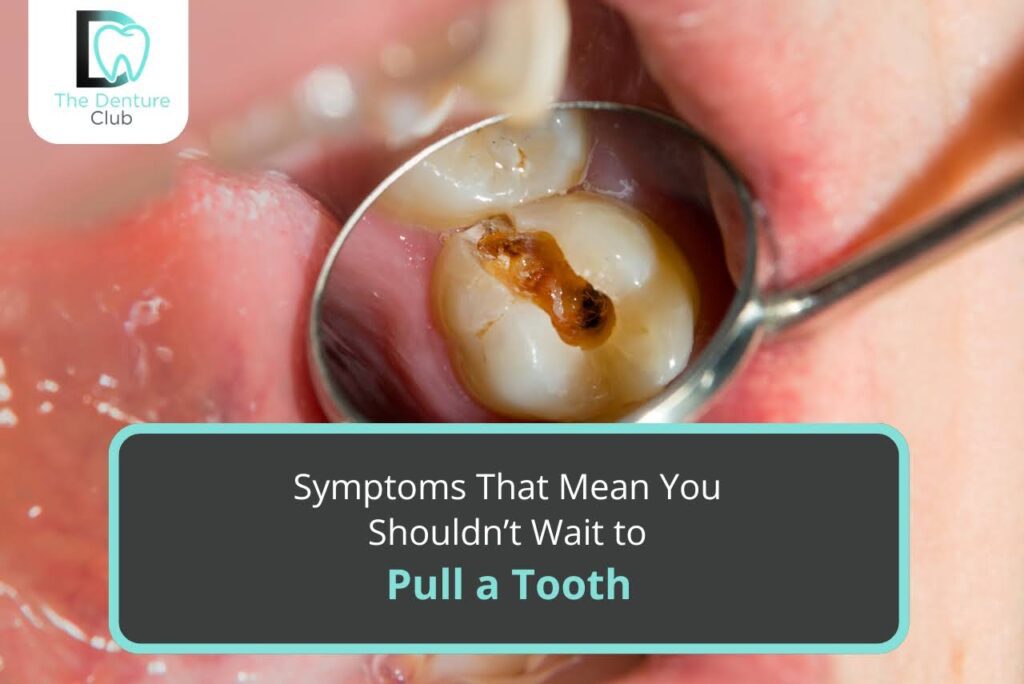
Physical damage or dark discoloration means decay has progressed beyond the enamel. When decay reaches the pulp or root, the tooth may not be restorable. Your dentist will assess whether extraction or another treatment, like a root canal, is best to prevent further damage.
6. Swollen Jaw or Face
Facial swelling often signals a deep infection that has spread beyond the tooth. This can become dangerous if it reaches your bloodstream or airway. If you notice swelling in your jaw, cheek, or neck, seek immediate dental or medical attention.
As the National Institutes of Health (NIH) explains, untreated dental infections can lead to abscesses that affect your overall health and may spread to vital areas of the body. Timely care can save your natural teeth, reduce pain, and protect your long-term oral health.
Risks of Waiting Too Long
Waiting too long to pull a damaged or infected tooth can cause far more than just discomfort. The infection can spread to your jawbone, sinuses, or bloodstream, creating dangerous complications.
Untreated dental infections can lead to osteomyelitis (bone infection) or sepsis, a potentially life-threatening condition, according to the Mayo Clinic.
It can also cause bone loss, weakening your jaw and making future tooth replacement more challenging. The sooner your Boise dentist removes the problem tooth, the faster your mouth can heal, and the less likely you’ll face extensive, costly treatments later.
What to Avoid Before and After Extraction
Proper care before and after your tooth extraction can make a big difference in how quickly and safely you heal. Certain actions can slow recovery or cause complications, so it’s essential to be cautious.
Before your extraction, avoid using sharp tools or objects to poke, press, or move the tooth, as this can worsen pain or spread infection. Don’t try home remedies or over-the-counter treatments without checking with your dentist. These can sometimes mask symptoms instead of treating the real problem.
After your extraction, avoid smoking, vaping, or drinking through a straw, since suction and nicotine can dislodge the healing clot and cause a painful dry socket. For the first few days, skip hard, crunchy, or hot foods and stick to soft, cool meals like yogurt or soup. Don’t ignore signs of trouble such as swelling, bleeding, or fever.
Your dentist will give you specific aftercare instructions to follow closely. These steps help prevent infection, protect the surgical site, and promote faster healing for a smooth recovery.
Simple Aftercare Tips for Faster Healing
Proper aftercare can make a big difference in how quickly and comfortably you recover. Here’s what to do after your extraction:
- Keep the area clean and avoid touching the socket.
- Eat soft foods like yogurt, soup, oatmeal, or mashed potatoes for a few days.
- Avoid drinking through a straw, since suction can dislodge the blood clot.
- Brush and floss gently, staying clear of the extraction site.
- Apply a cold compress if swelling appears.
- Visit your Boise dentist for follow-up care and healing checks.
According to the AAOMS (American Association of Oral and Maxillofacial Surgeons), most people heal within one to two weeks with proper care. Pain typically decreases after the first few days, and swelling subsides quickly when instructions are followed.
Alternative Treatments Before Considering Extraction
Sometimes, a dentist may try to save the tooth before recommending removal. These options depend on the condition of your tooth and the surrounding bone.
- Root Canal Therapy: Removes the infection inside the tooth while preserving the outer structure. Ideal for teeth with nerve infection but no severe decay.
- Dental Crowns: Strengthen weak or broken teeth and restore shape, allowing you to chew and speak normally.
- Antibiotics: May control infection temporarily, but don’t eliminate the root cause if the tooth is badly damaged.
If the tooth cannot be saved, your dentist may recommend a safe extraction followed by replacement options like dental implants or dentures.
Final Thoughts: Don’t Delay Professional Dental Care
Tooth pain should never be ignored. Acting early can prevent severe infections, save nearby teeth, and protect your overall health.
Don’t wait for tooth pain to get worse. Visit The Denture Company Boise for safe, stress-free tooth extraction today. Call our friendly team to schedule your appointment and protect your smile with trusted local dental care.
Frequently Asked Questions (FAQs)
1. How do I know if I need a tooth pulled?
If you have constant tooth pain, swelling, or a deep cavity that can’t be repaired, your dentist may recommend extraction. Visit early for an accurate evaluation.
2. Can an infected tooth heal on its own?
No, a tooth infection won’t heal without treatment. Without dental care, the infection can spread and cause serious health issues.
3. Is tooth extraction painful?
Modern extractions are safe and nearly painless. Local anesthesia ensures you feel only light pressure, not pain.
4. How long does it take to recover after a tooth extraction?
Most people heal within one to two weeks. Following your dentist’s aftercare advice and eating soft foods will help you recover faster.
5. What happens if I don’t pull a damaged tooth?
Delaying treatment can lead to severe infection, bone loss, and damage to nearby teeth. It’s always safer to remove a problem tooth early.