
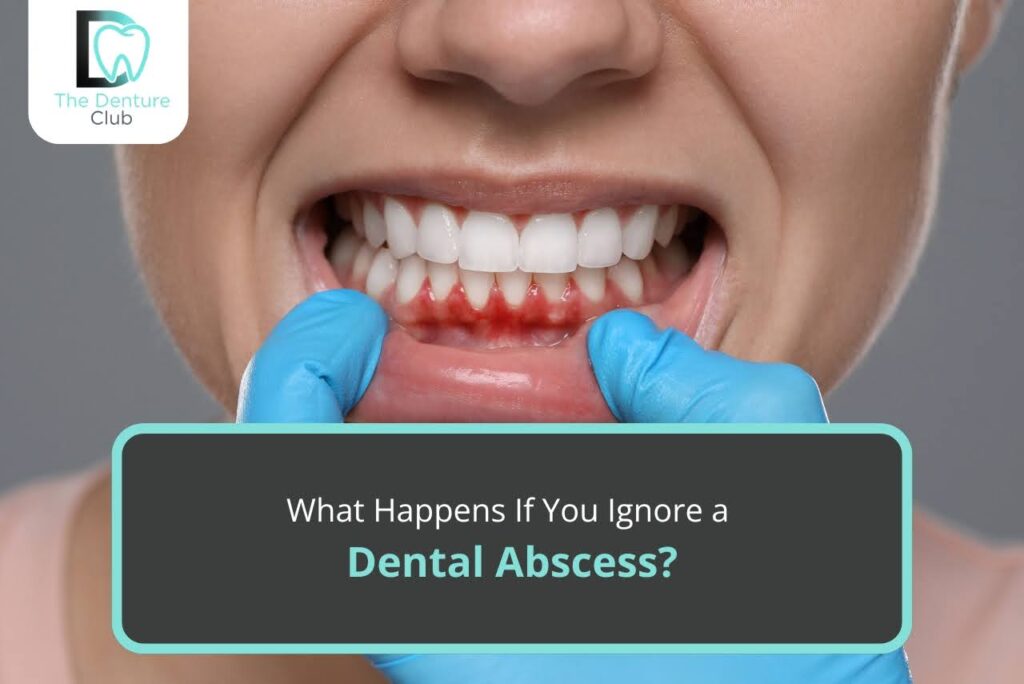
When a Toothache Becomes Dangerous
At The Denture Company Boise, we often see patients who try to “wait out” a toothache, only to find themselves facing severe pain, swelling, or even a serious infection. One of the most dangerous conditions behind this pain is a dental abscess, a deep infection that won’t heal on its own.
Ignoring an abscess isn’t just uncomfortable; it’s risky. Without prompt treatment, the infection can spread to your jaw, sinuses, and even your bloodstream, leading to life-threatening complications. In this guide, we’ll explain exactly what a dental abscess is, the warning signs, how it’s treated, and what can happen if you delay care.
What Is a Dental Abscess?
A dental abscess is a pocket of pus that forms due to a bacterial infection inside the tooth or gums. According to the National Institutes of Health (NIH), it occurs when bacteria invade the dental pulp, the soft tissue that contains nerves and blood vessels, usually because of untreated decay, gum disease, or trauma.
There are three main types:
- Periapical abscess: Forms at the tip of a tooth’s root, usually from decay or injury.
- Periodontal abscess: Develops in the gums, often from gum disease.
- Gingival abscess: Found only in the gum tissue, not involving the tooth itself.
No matter the type, abscesses share one thing in common: they don’t go away without treatment.
Why Do Dental Abscesses Hurt So Much?
The pain from an abscess is intense because the infection creates pressure inside a closed space, your tooth or gum tissue. The buildup of pus and swelling compresses nerves, leading to sharp, throbbing pain that often radiates to the jaw, ear, or neck.
The Mayo Clinic explains that pain from a dental abscess can worsen when lying down, chewing, or applying pressure. As the infection grows, it can cause visible swelling in the face or jaw and make it difficult to open your mouth or swallow.
Ignoring this pain gives the bacteria more time to spread, which can quickly turn a localized infection into a medical emergency.
Warning Signs You Shouldn’t Ignore
A dental abscess often starts subtly but escalates quickly. According to WebMD and the American Dental Association (ADA), you should seek dental care immediately if you experience:
- Persistent, throbbing tooth pain
- Swelling in your gums, jaw, or face
- Red or shiny gum tissue
- Pus or a foul taste in your mouth
- Fever or chills
- Sensitivity to hot or cold
- Swollen lymph nodes in your neck
- Trouble swallowing or breathing
If you notice pus, swelling, or fever, it’s a red flag; these are signs the infection is spreading. At this stage, delaying care can lead to serious systemic complications.
Top Reasons Dental Abscesses Form
At The Denture Company Boise, we treat dental abscesses caused by several underlying problems:
1. Untreated Tooth Decay
When cavities aren’t filled, bacteria penetrate the enamel and dentin layers until they reach the pulp. Once the pulp is infected, it can no longer heal naturally, leading to an abscess at the root tip.
2. Advanced Gum Disease (Periodontitis)
According to the CDC, nearly half of U.S. adults over 30 have some form of gum disease. When bacteria infect deep gum pockets, the tissue pulls away from the tooth, allowing pus to form beneath the gums.
3. Cracked or Broken Teeth
Even small cracks from grinding, trauma, or old fillings can open pathways for bacteria to enter the tooth’s inner layers.
4. Failed Dental Procedures
In rare cases, dental restorations like crowns or root canals may fail to seal properly, creating space for infection.
What Happens If You Ignore a Dental Abscess?
Ignoring an abscess allows bacteria to multiply and spread, first locally, then systemically. The National Institute of Dental and Craniofacial Research (NIDCR) and CDC both warn that untreated abscesses can cause:
1. Jawbone and Tooth Loss
The infection can erode the bone supporting your teeth, causing loosening or total loss.
2. Facial Cellulitis
When infection spreads to the skin and tissue of the face, it causes swelling, redness, and warmth, a serious condition requiring antibiotics or hospitalization.
3. Sinus Infection or Brain Abscess
Upper tooth abscesses can spread to the maxillary sinuses or, in rare cases, reach the brain, leading to dangerous abscess formation.
4. Sepsis (Blood Infection)
According to NIH research, if bacteria enter the bloodstream, they can trigger sepsis, a life-threatening reaction that causes organ failure.
5. Difficulty Breathing or Swallowing
When swelling extends to the neck or throat, it can compress airways, making it difficult to breathe, a true medical emergency.
How Dentists Treat a Dental Abscess
At The Denture Company Boise, our goal is to eliminate infection, relieve pain, and protect your health. Treatment depends on how advanced the abscess is, but often includes:
1. Draining the Abscess
Your dentist may make a small incision to release the pus and reduce pressure. This provides immediate relief but is not a cure; the source of infection must still be addressed.
2. Root Canal Therapy
If the tooth structure is salvageable, the infected pulp is removed, the canals are cleaned, and the tooth is sealed and restored with a crown.
3. Tooth Extraction
If the damage is too severe, extraction may be the safest option. As the American Association of Oral and Maxillofacial Surgeons (AAOMS) notes, removing the infected tooth stops the spread of bacteria and promotes healing.
4. Antibiotics and Pain Management
Antibiotics may be prescribed to control the infection, especially if swelling or fever is present. Pain can be managed with over-the-counter medication or dentist-prescribed analgesics.
What Recovery Looks Like After Abscess Treatment
Healing time varies depending on treatment type. Most patients begin feeling better within 2–3 days, though complete healing may take 1–2 weeks.
To speed up recovery:
- Keep the area clean, but avoid brushing directly over it for 24 hours.
- Use warm saltwater rinses to reduce swelling and bacteria.
- Stick to soft foods like yogurt, mashed potatoes, and smoothies.
- Avoid alcohol, smoking, or using straws (to prevent dry socket after extraction).
- Take medications exactly as prescribed.
The ADA recommends completing all antibiotics even if symptoms disappear; stopping early can allow bacteria to return.
Can You Prevent Dental Abscesses?
Absolutely, prevention is the key to avoiding painful and costly dental emergencies. Follow these steps recommended by the ADA and CDC:
- Brush twice daily with fluoride toothpaste.
- Floss once a day to remove trapped food and bacteria.
- Visit your dentist every 6 months for cleanings and exams.
- Treat cavities early before they reach the tooth pulp.
- Use a mouthguard if you grind your teeth or play sports.
Preventive dental care is always easier, safer, and more affordable than treating an abscess after it develops.
When to Seek Emergency Help
Call your dentist or an emergency dental clinic right away if you experience:
- Facial swelling
- Fever over 101°F
- Difficulty breathing or swallowing
- Severe, constant pain
- Pus or foul odor in your mouth
If your dentist is unavailable and symptoms worsen rapidly, go to the ER immediately. A spreading dental abscess is a medical emergency that requires urgent care.
Final Thoughts
Ignoring a dental abscess won’t make it go away; it will only give the infection time to spread. What starts as a small toothache can escalate into jawbone loss, hospitalization, or even life-threatening complications.
At The Denture Company Boise, we’re here to stop that from happening. Our compassionate dental team provides fast, effective treatment to relieve pain, remove infection, and restore your oral health safely.
If you’re feeling swelling, pressure, or throbbing pain in your mouth, don’t wait. Call us today for same-day emergency care and protect your smile before it’s too late.
Frequently Asked Questions (FAQs)
- Can a dental abscess go away on its own?
No, a dental abscess will not heal without treatment. The infection may temporarily subside, but bacteria remain and can spread deeper into the jaw or bloodstream.
- How quickly can a dental abscess become serious?
A dental abscess can escalate within 24 to 72 hours if untreated, leading to severe pain, swelling, and potential systemic infection requiring emergency care.
- What should I do if my face starts swelling from an abscess?
Facial swelling is a red flag; contact your dentist or visit an emergency clinic immediately. Swelling indicates the infection is spreading and needs urgent treatment.
- Can antibiotics alone cure a dental abscess?
Antibiotics can control infection temporarily, but won’t remove its source. Definitive treatment, like drainage, root canal, or extraction, is needed to prevent recurrence.
- Is dental abscess treatment covered by Medicaid in Idaho?
Yes, in most cases. Idaho Medicaid may cover tooth extraction or abscess drainage if medically necessary. Always confirm coverage with your provider before treatment.
References
- Medicaid.gov – Medicaid Dental Coverage Overview
https://www.medicaid.gov - CDC.gov (Centers for Disease Control and Prevention) – Oral Health & Dental Infection Control
https://www.cdc.gov/oralhealth - NIH.gov (National Institutes of Health) – Dental Abscess and Oral Health Research
https://www.nih.gov - NIDCR (National Institute of Dental and Craniofacial Research) – Oral Infections and Tooth Decay
https://www.nidcr.nih.gov - ADA.org (American Dental Association) – ADA MouthHealthy: Tooth Abscess and Treatment
https://www.ada.org - AAOMS.org (American Association of Oral and Maxillofacial Surgeons) – Tooth Extraction and Infection Management
https://www.aaoms.org - MayoClinic.org – Tooth Abscess Symptoms, Causes, and Treatment
https://www.mayoclinic.org - WebMD.com – Dental Abscess: Causes, Symptoms, and Treatments
https://www.webmd.com/oral-health